CASCO at InnoTrans 2026: Redefining the Signalling Boundary, the Path to Autonomous Rail Network
05 Oct 2026
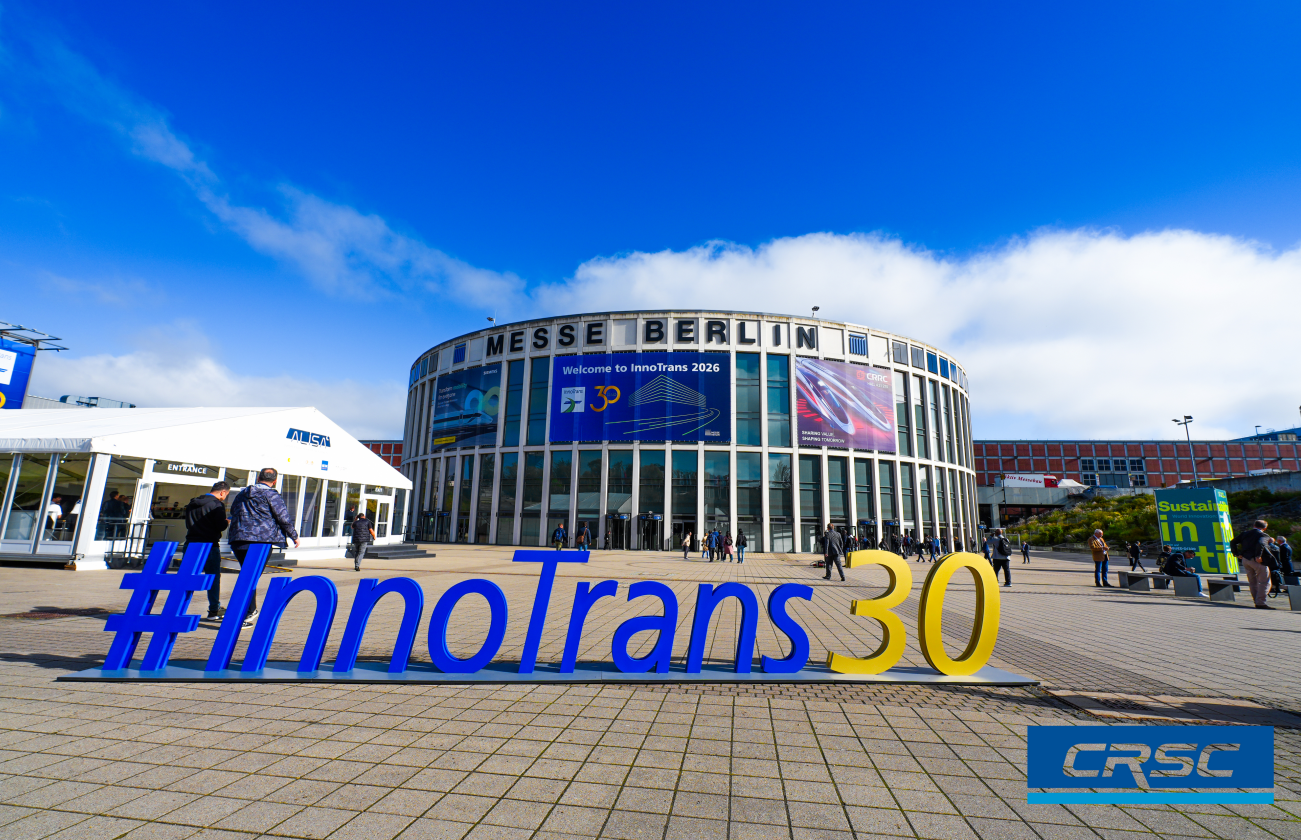
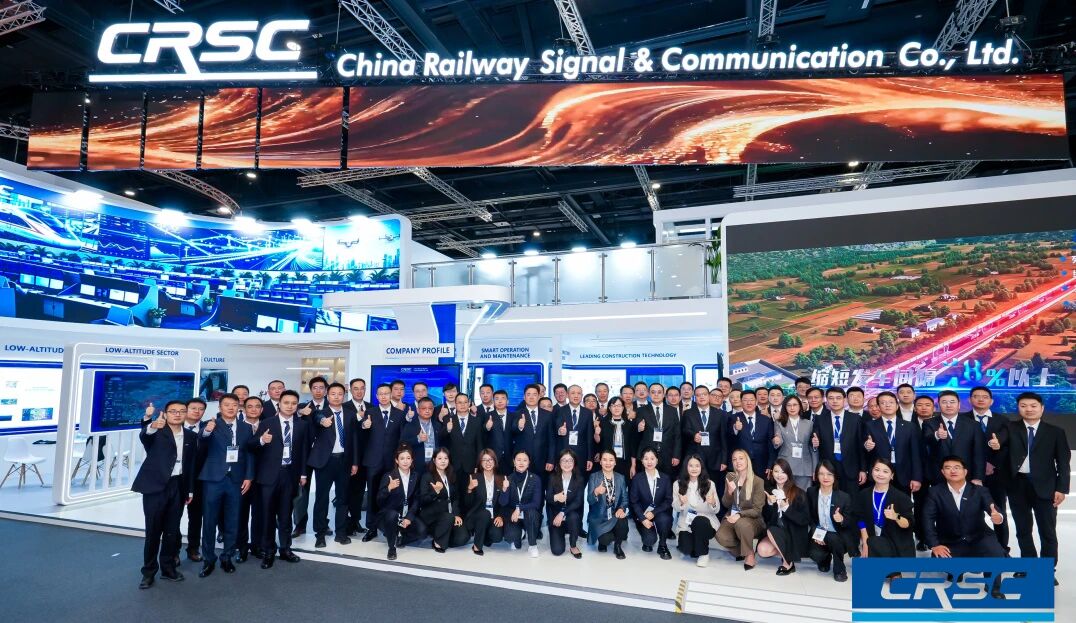
On September 22, InnoTrans 2026 — the world's largest rail technology trade fair — opened in Berlin. CRSC attended the exhibition, with CASCO joining to showcase a series of core rail transit control technologies and benchmark projects, while sharing its forward-looking vision for an autonomous rail network and engaging in in-depth exchanges with industry peers from around the world.
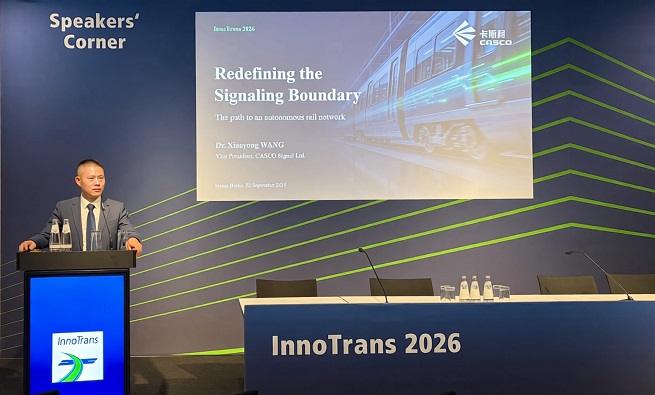
During the event, Dr. Wang Xiaoyong, Vice President of CASCO, delivered a keynote speech titled "Redefining the Signaling Boundary: The Path to Autonomous Rail Network". To address the challenge of meeting multiple operational objectives simultaneously across a rail network, he called for a fundamental redefinition of three core boundaries of signaling systems, and shared the relevant technical pathways and cutting-edge practices.
Addressing the five core operational goals — safety, efficiency, resilience, economy, and sustainability, Wang told attendees: "Traditional signaling architectures have become the invisible ceiling on network performance. The industry cannot keep answering these challenges by simply adding more equipment. We need a single system architecture that delivers all five priorities at once." He argued that, autonomy must extend deeper into system design, across four core dimensions: autonomous sensing & decision, autonomous resource management, autonomous environment adaptation and autonomous failure recovery.
Delivering this requires redrawing four fundamental boundaries of signaling design. Wang elaborated on three aspects: First, responsibility: from single safety mandate to integrated multi-objective control. Efficiency, resilience, cost efficiency and sustainability are now embedded within the same safety-critical system, ending the historic trade-off between safety and operational performance. Second, architecture: from ground-centric to distributed train-train control, enabling autonomous operation on routes. Third, hardware & software: from function-bound cabinets to software-defined capability. Breaking the legacy “one function, one dedicated cabinet” model, CASCO proposes a layered, software-defined technology stack. Capability scales through software deployment rather than hardware build-out. Fourth, certification: from blanket rail-grade to risk-based graded classification. Instead of applying the highest level of rail-specific certification to every component, the boundary between COTS and certified equipment is defined by safety case requirements.
These are not theoretical concepts. CASCO has demonstrated the viability of this vision through its XiDRT Digital Urban Rail Transit Solution and XeDRT Digital Freight Solution, as well as flagship products and project practices including TRANAVI QiJi TACS, Smart Automatic Train Control System (SATC), and the Intelligent Platform Screen Door (IPSD).
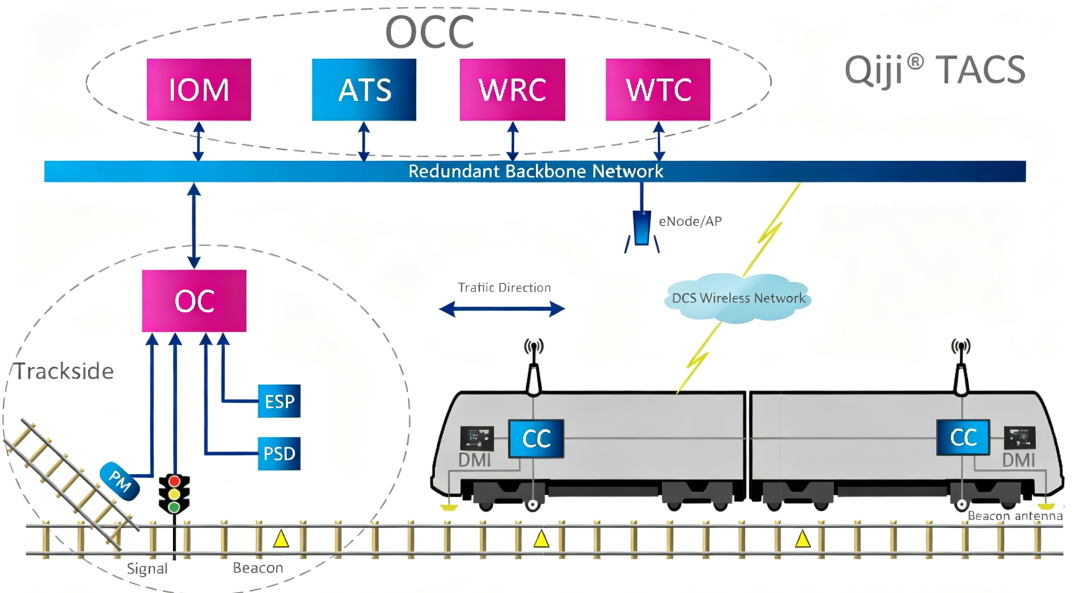
TRANAVI QiJi TACS — the world's first TACS system to enter commercial operation — compresses headways to under 60 seconds in GoA4 driverless mode, reduces trackside control room footprint by two-thirds, and cuts maintenance costs by 30% compared to CBTC. Deployed on Shenzhen Line 20 in 2021, it has since been applied to Shanghai Lines 3 and 4, the world's first TACS revamp on a line carrying over a million passengers, and Wuhan Line 1, the world's first CBTC-to-TACS revamp.
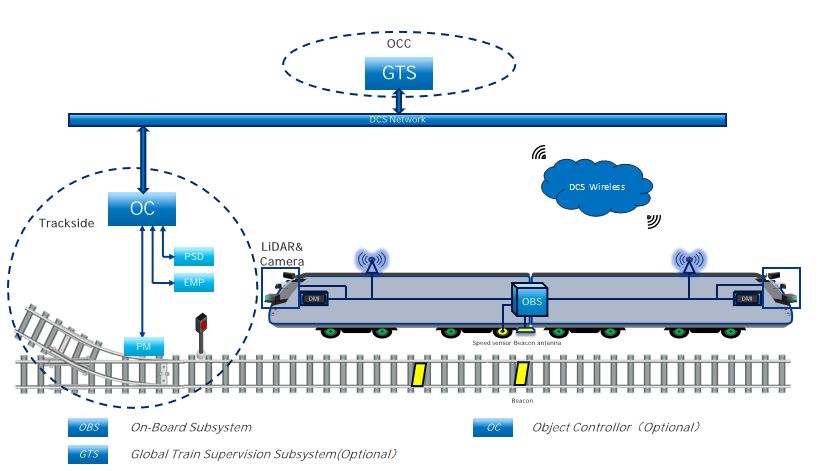
SATC integrates LiDAR and machine vision, enabling trains to detect obstacles and identify the train ahead without relying on trackside signals. Even if the primary signaling system fails, it ensures safe operation. The system has been deployed on Beijing Line 9 and completed Proof-of-Concept testing at Singapore's Bishan Depot.
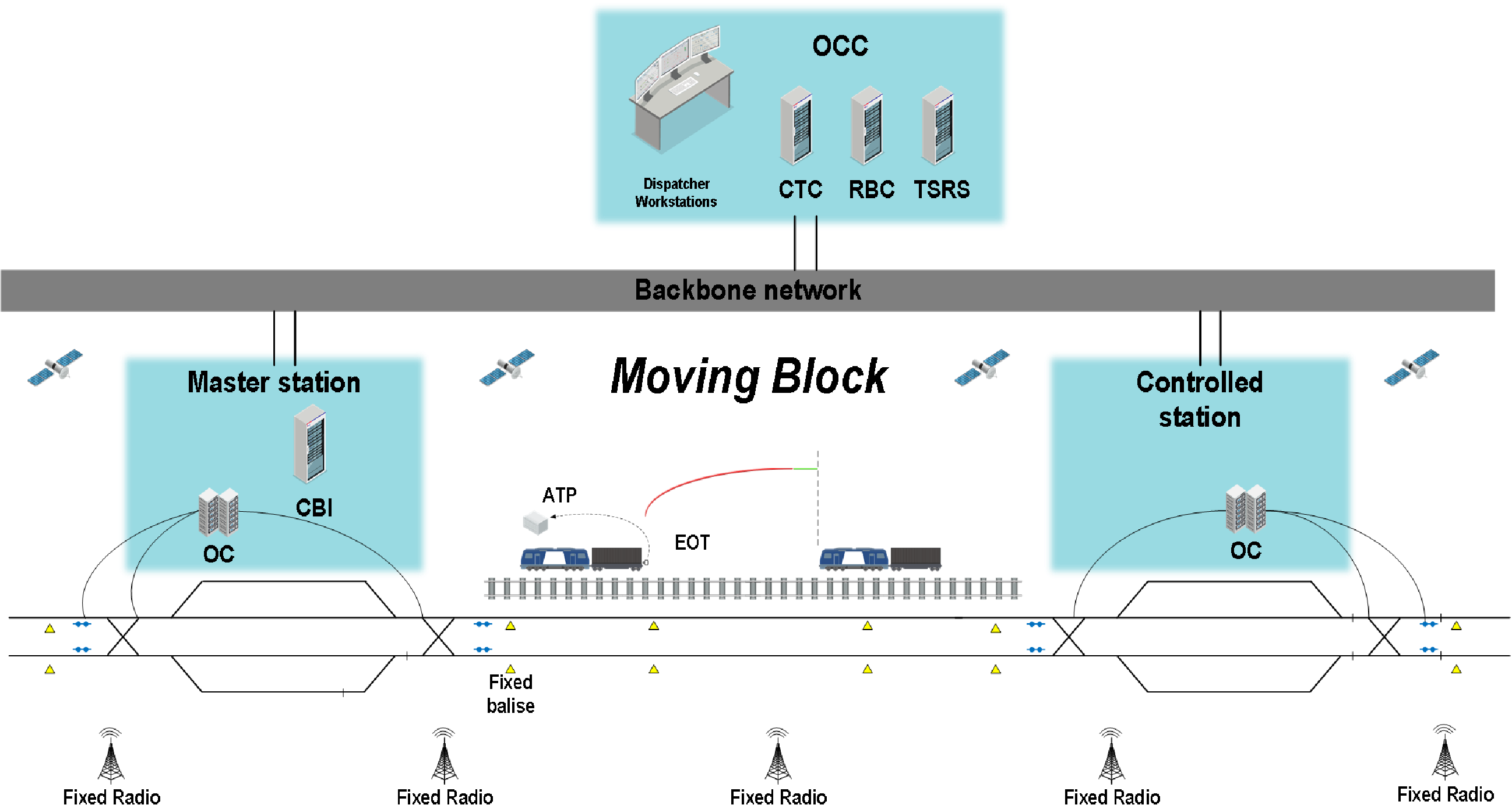
Train Autonomous Control Next-gen (TACN) leverages multi-source fusion satellite positioning, eliminating dependence on dense trackside equipment. On the Pingmei heavy-haul line, it reduced train intervals from 25 minutes to 4 minutes, boosting capacity sixfold without laying a single meter of new track. It has also been deployed on the Railway from the Port of Morebaya to Simandou Mining Area in Guinea, successfully extending autonomous signaling technology to long-distance freight and mainline railways.
Software-Defined Train Control (SDTC) Solution serves as the underlying foundation supporting the three solutions above. It decouples control logic from proprietary safety hardware, supports cloud deployment, and eliminates the need for dedicated hardware per function. With its decoupled, continuously iterable software architecture, it improves mean time between failures (MTBF) by 39%.
With 40 years focused on rail transit control systems, CASCO serves more than 30 cities worldwide, and has participated in over 100 urban rail lines with more than 3,500 kilometers in operation. "We have hands-on experience with ultra-large-scale networks and the international capability to serve projects across multiple countries," Wang said in closing. " The autonomous rail network is not about more equipment. It is about a re-engineered boundary. We look forward to redrawing that boundary together with partners from around the world."
From September 22 to 25, CASCO is exhibiting its autonomous signaling technologies and benchmark project cases at Stand 730, Hub 27, Messe Berlin. You are welcome to stop by.